Four day trips cover the island: the mountains, Las Palmas, the south coast and the traditional north.
Walking up to Roque Nublo from La Goleta needs an online booking during the day; viewpoints do not.
In the Maspalomas dunes you may walk only on the marked paths.
With kids: the Poema del Mar aquarium, a dolphin boat from Puerto Rico and calm Las Canteras.
Guided tours with pickup in the south start from €47.
The main things to do in Gran Canaria fit into four easy days out from the south coast: the mountain villages around Roque Nublo and Tejeda, the old town and city beach of Las Palmas, the Maspalomas dunes and harbours of the south, and the green north with Arucas, Firgas and Teror. With children, add a dolphin-watching boat and the Poema del Mar aquarium. You can see all of it without hiring a car.
Below you will find what to see in Gran Canaria area by area, ideas for kids, the rules for Roque Nublo and the dunes, and practical tips for the mountains.
Gran Canaria at a glance
Area
What to see
Without a car
The mountains
Roque Nublo, Cruz de Tejeda, Tejeda, the Fataga valley
Coach tour from the south, or Global bus line 18
Las Palmas
Vegueta, Triana, Las Canteras, Poema del Mar
Guided day trip, or Global bus line 91
The south coast
Maspalomas dunes, Puerto de Mogán, Puerto Rico
Global buses along the coast
The north
Arucas, Firgas, Teror
Coach tour from the south
The sea
Dolphins and whales
Boat trip from Puerto Rico
Most visitors stay in the south, between Puerto de Mogán and San Agustín, so every trip below starts there. Our coach tours in Gran Canaria collect you at the meeting point nearest your hotel and bring you back in the evening.
The mountains: Roque Nublo, Cruz de Tejeda and Tejeda
The centre of the island is a different world from the beaches: pine woods, deep ravines and mountain villages. The highest point reaches 1,956 metres, according to the island’s tourist board.
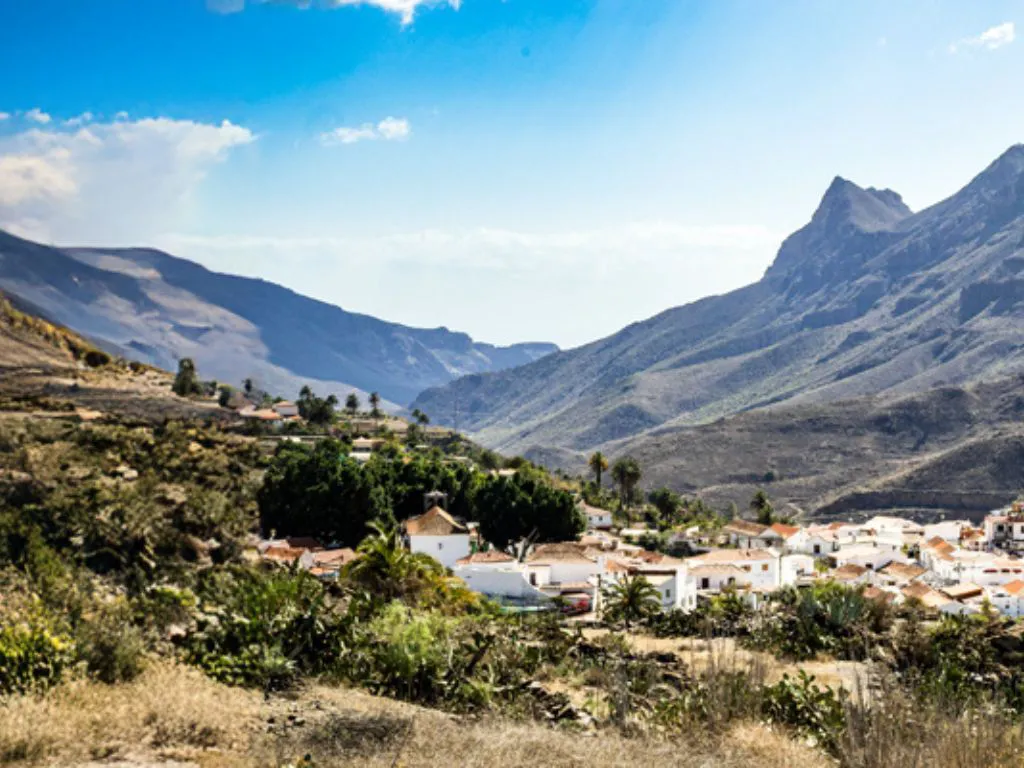
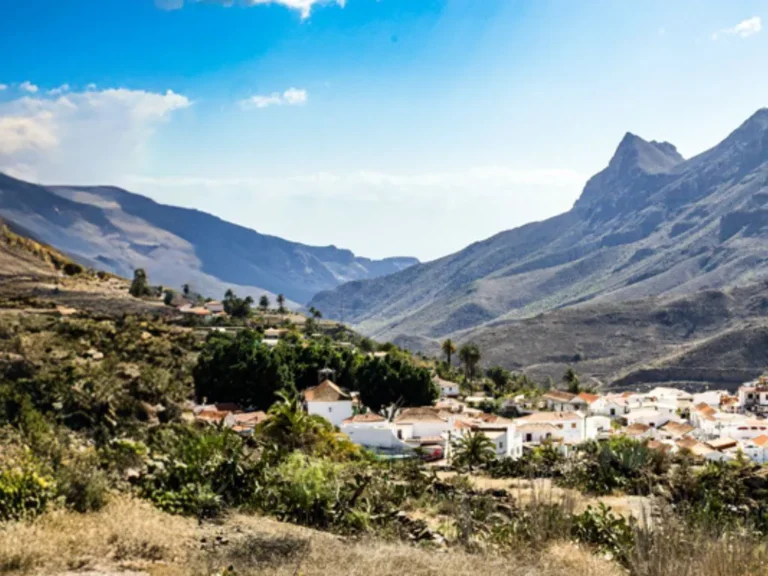
Fataga – a small whitewashed village in a valley of ravines and palm trees, on the way up from the south.
Roque Nublo – a volcanic rock almost 90 metres high, protected as a Natural Monument and one of the best-known symbols of the island.
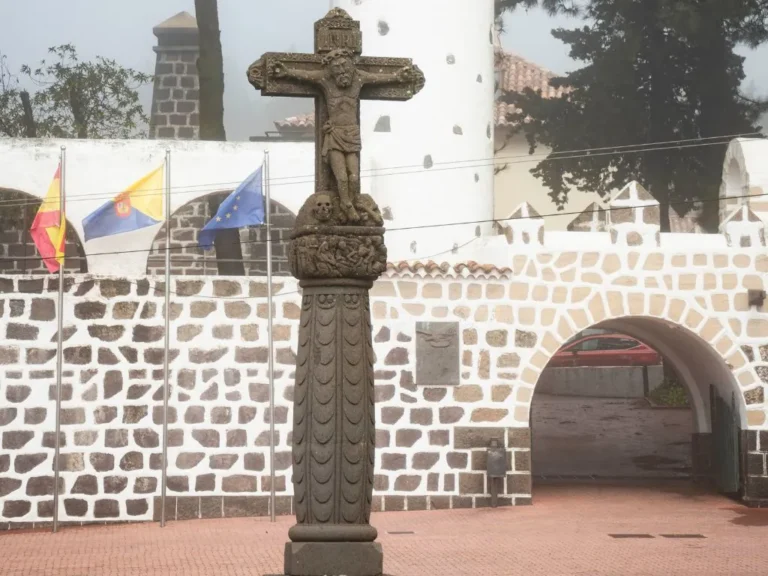
Cruz de Tejeda – the stone cross on the pass that marks the centre of Gran Canaria, with viewpoints and a Parador hotel.
Tejeda – named one of the prettiest villages in Spain and known for sweets made from local almonds, such as bienmesabe and marzipan.
The summit area is part of the Gran Canaria Biosphere Reserve, declared by UNESCO in 2005, and the cave sites of Risco Caído and the Sacred Mountains, around Tejeda and Artenara, are a UNESCO World Heritage Site.
Can you walk up to Roque Nublo?
Yes, but plan ahead. Since 2025 the Cabildo de Gran Canaria has limited access to the S-70 trail from the Degollada de La Goleta: during the day you need an online booking, entry is checked with a QR code and up to 60 people an hour are let in. Hikers who arrive on foot by other trails do not need a booking. Parking next to the rock is no longer allowed: a Global shuttle bus runs from Tejeda and Cruz de los Llanos, and Global line 18 comes up from the south three times a day. Check hours and timetables before you go.
If you would rather enjoy the views without the planning, Gran Canaria from the Heights stops at the Degollada de Becerra viewpoint, a classic spot for photos of Roque Nublo, and gives you an hour of free time in Tejeda. It does not include the hike to the rock.
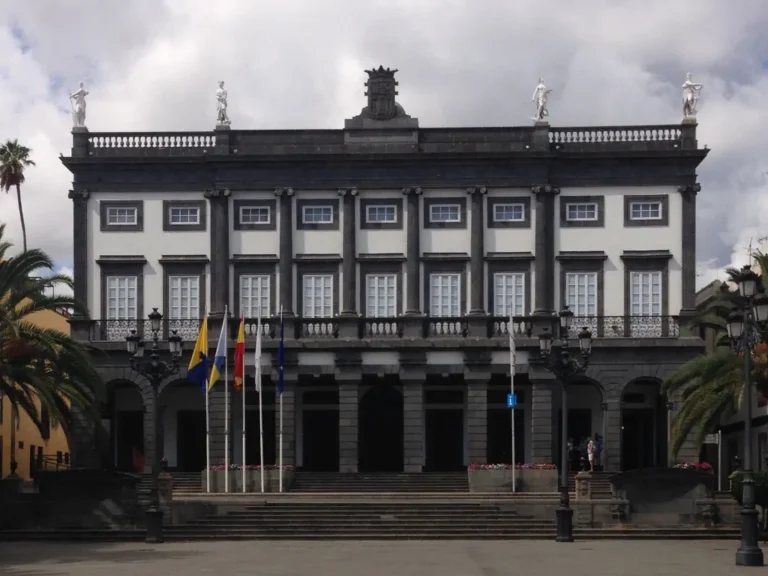
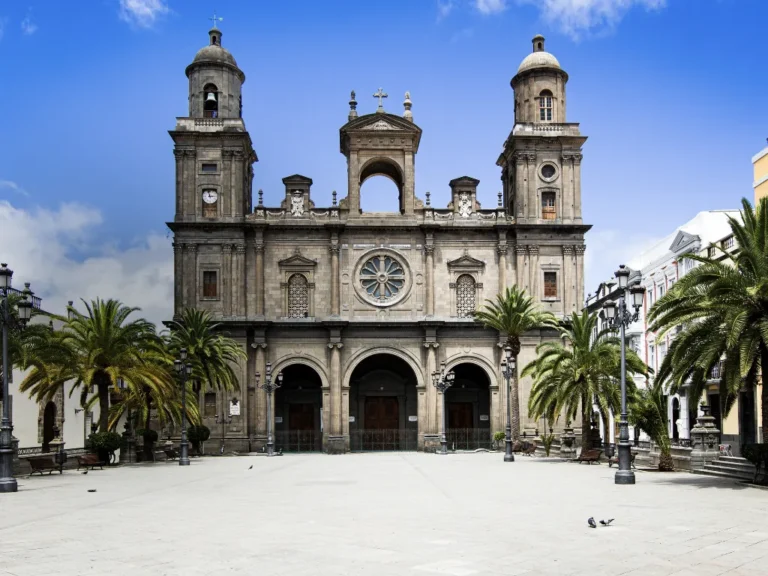
The capital is a lively port city with a long history. Its oldest quarter, Vegueta, has narrow cobbled streets that are more than 500 years old, built around the stone Cathedral of Santa Ana, and the Casa de Colón recalls Columbus’s stop on the island. Next to it lies Triana, the second historic district.
On the other side of the city, Las Canteras is a city beach with a promenade along its three kilometres. A natural reef called La Barra runs parallel to more than half of the beach and breaks the waves, so the water behind it is usually calm. The city’s tourist office names the Muro Marrero area as the most family-friendly part, while surfers head for La Cícer.
Poema del Mar aquarium
Poema del Mar stands on the Sanapú pier in the port, linked to Las Canteras by a footbridge. Its Deep Sea area has sharks and rays, a 360° viewing dome and what the city’s tourist office calls the largest curved window in the world. It opens every day – at the time of writing from 9:30 to 17:30 – and about two hours is enough for a visit.
Our Las Palmas day trip combines a guided walk through Vegueta and Triana with free time at Santa Catalina, close to Las Canteras, and you can add the aquarium ticket as an option. If you are already in the city, a Poema del Mar entry ticket is all you need.
The south: Maspalomas dunes, Puerto de Mogán and Puerto Rico
The Maspalomas dunes are a Special Nature Reserve of about 400 hectares with moving sand dunes, a palm grove and a brackish lagoon, the Charca, where migrating birds rest. They begin right behind the 55-metre Maspalomas lighthouse, first lit in 1890.
You are welcome to walk in the dunes, but only on the marked paths: about 8 km of paths and tracks are signposted. Leaving them damages the dunes and can be dangerous, building walls or towers with stones is not allowed, and camping is forbidden. Take water and sun cream, as there is no shade on the open sand.
Further west, Puerto de Mogán is a small harbour village with narrow canals and colourful streets, a pleasant place for an evening walk. Puerto Rico, between Arguineguín and Mogán, has a small beach and a busy harbour where fishing boats and dolphin-watching boats leave.
Dolphin watching from Puerto Rico
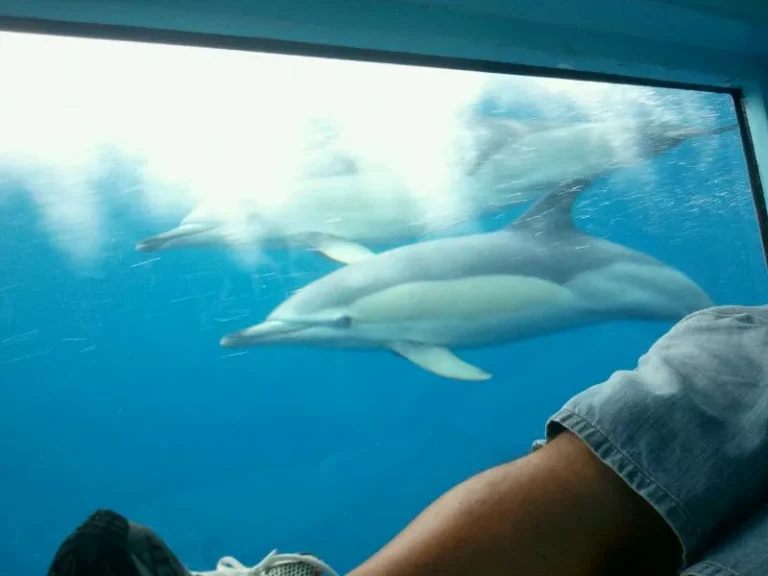
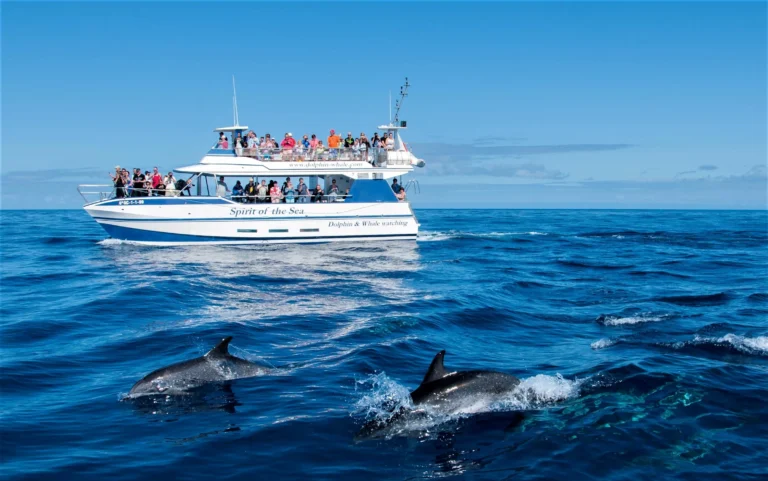
Dolphins and whales live in the waters around the Canary Islands, but they are wild animals and no boat can promise a sighting. Spirit of the Sea leaves Puerto Base in Puerto Rico every day at 10:30 and 13:30, plus 16:30 in July and August, for about two and a half hours, with underwater viewing and soft drinks on board. On the 13:30 trip there may be a swim if the sea allows.
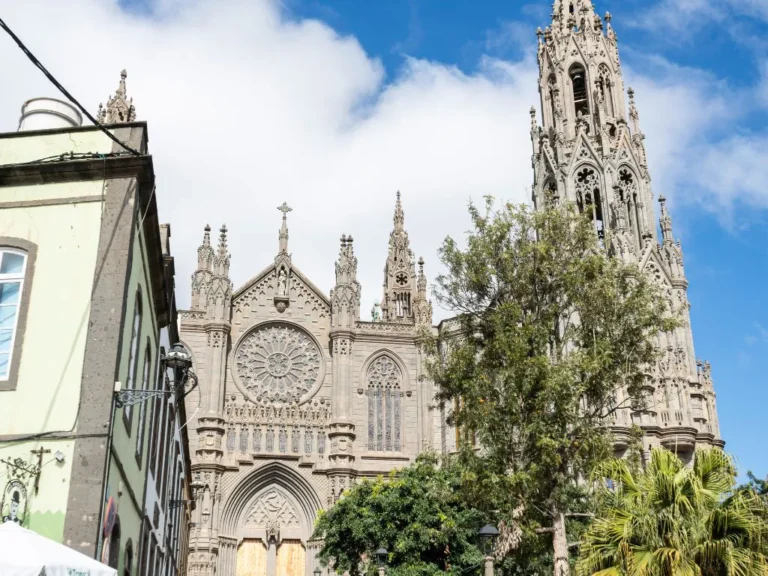
The north is greener and feels more traditional than the resorts. Arucas is crowned by the neo-Gothic Church of San Juan Bautista and has a rum distillery. Little Firgas is known for its mineral water springs and fountains, and for streets decorated with tiles showing each of the Canary Islands. Teror has wooden balconies and an 18th-century basilica dedicated to Our Lady of the Pine, the patron saint of Gran Canaria.
Traditional Gran Canaria visits all three towns in about 6–7 hours, with a rum distillery visit and free time for lunch in Teror. Staying on Tenerife? The Gran Canaria Experience crosses by ferry on Fridays and includes Vegueta, Poema del Mar and a rum tasting at the Arehucas distillery.
Poema del Mar: about two hours indoors, a good plan for a cloudy day. Children aged 3–11 pay less, under-3s go free, and visitors under 18 must come with an adult.
Las Canteras: the reef keeps the water calm on most days, and the Muro Marrero area is the family corner of the beach.
A dolphin boat: two and a half hours is a manageable length for most children, and under-3s travel free.
Coach tours: 6–9 hours with short walks – fine for school-age children, long for toddlers. Under-3s go free.
On every beach, check the flag before you swim: red means no swimming, yellow means take care and green means good conditions.
Practical tips: distances, weather and what to bring
Day out from the south
Time on our tour
Good to know
Mountains: Fataga, Roque Nublo views, Tejeda
8–9 hours
Pickup from about 8:00; winding roads and cooler air
Las Palmas: Vegueta, Triana, Santa Catalina
About 9 hours
Aquarium ticket as an option
North: Arucas, Firgas, Teror
6–7 hours
Cobbled streets; lunch in Teror
Dolphin watching from Puerto Rico
About 2.5 hours
Transfer from the south on request
By public bus, Global line 91 links Puerto de Mogán, Puerto Rico and Arguineguín with the airport and Las Palmas; the tourist board puts Puerto de Mogán to the airport alone at about 55 minutes. Check timetables on the Global website. If you drive, allow extra time on the narrow mountain roads.
The weather changes with the landscape. The trade winds often bring clouds to the north and the middle slopes, while the south is usually sunnier and drier. The sea follows the same pattern: the Canary Islands government notes that southern beaches are generally calmer than northern ones, where wind, waves and currents are stronger.
For a day in the mountains, bring:
a warm layer or windproof jacket – it is clearly cooler up there than on the coast;
comfortable shoes for viewpoints and cobbled village streets;
sun cream, sunglasses and a hat, as the sun is strong at altitude;
water, a snack and a little cash, because lunch is not included on our coach tours.
The main sights are Roque Nublo, Cruz de Tejeda and the village of Tejeda in the mountains, the old quarter of Vegueta and Las Canteras beach in Las Palmas, the Maspalomas dunes, the harbour of Puerto de Mogán and the historic towns of Arucas, Firgas and Teror in the north.
Do I need to book to visit Roque Nublo?
To walk up the main S-70 trail from the Degollada de La Goleta during the day, yes: the Cabildo de Gran Canaria requires an online booking with a QR code. You do not need one to see Roque Nublo from viewpoints such as the Degollada de Becerra.
Can you walk in the Maspalomas dunes?
Yes, on the signposted paths. The dunes are a protected nature reserve, so leaving the marked paths, building stone walls and camping are not allowed.
What can you do in Gran Canaria with kids?
Families enjoy the Poema del Mar aquarium in Las Palmas, a dolphin-watching boat from Puerto Rico, the calm water behind the reef at Las Canteras and a walk in the Maspalomas dunes.
Can you see Gran Canaria without a car?
Yes. Coach tours with pickup in the south go to the mountains, Las Palmas and the north, and Global buses link the southern resorts with Las Palmas and the mountains.
A sheltered resort on the south-west coast of Gran Canaria: the beaches of Puerto Rico and Amadores, dolphin watching from the harbour and getting around without a car.
The Las Palmas carnival runs from 22 January to 28 February 2027, with the Gran Cabalgata on 20 February. Here are the key dates, the Maspalomas carnival and the buses.
Gran Canaria’s symbolic rock and a mountain village nearby: why you now book the walk to Roque Nublo, how to get there by bus and what a day trip covers.


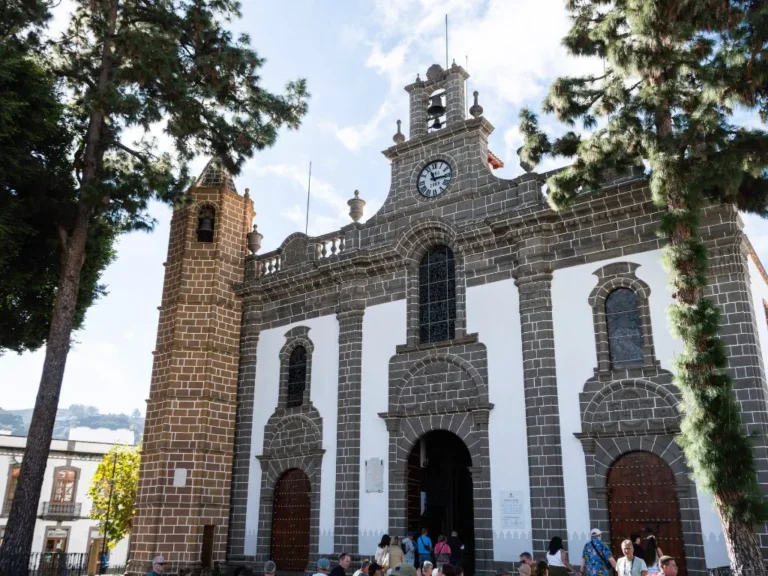 Traditional Gran Canaria: Arucas, Firgas and Teror