The classic sights: the Corralejo dunes, Isla de Lobos, Betancuria, Ajuy, Cofete and El Cotillo.
Landing on Isla de Lobos needs a permit from the Cabildo, requested online through Lobos Pass.
Cofete and Ajuy have no lifeguards; at Cofete the waves are strong, so walk rather than swim.
Lanzarote is a 30–45-minute ferry ride from Corralejo; our day trips include hotel pickup.
The island tour with lunch starts from €69.
The main things to do in Fuerteventura are about beaches and open landscapes: the white dunes of Corralejo, a boat trip to the small island of Lobos, the old capital Betancuria, the sea caves of Ajuy, the wild beach of Cofete, the fishing village of El Cotillo and calm Caleta de Fuste. Many visitors also take a day trip to Lanzarote, a short ferry ride from Corralejo. For Fuerteventura sightseeing without a car, an island tour and the ferry trips cover most of it.
Below you will find what each place is like, the permit you need for Lobos, which beaches have dangerous currents, and how to plan around the wind and the distances.
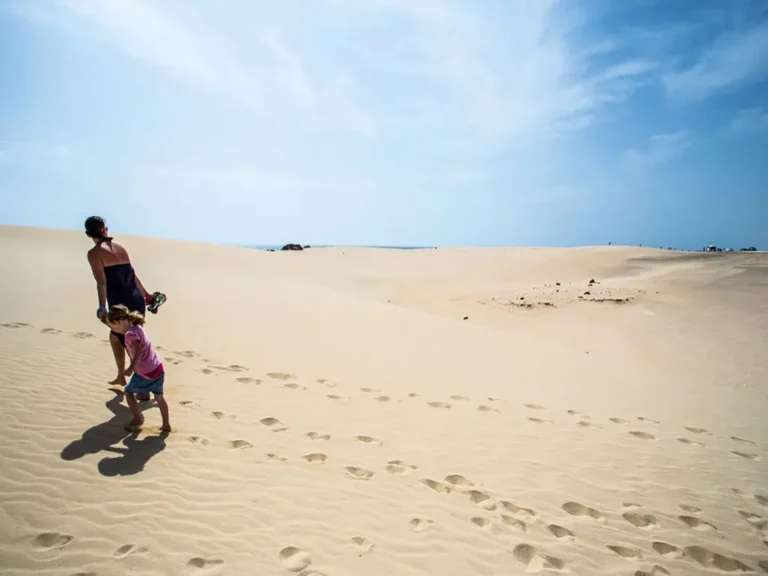
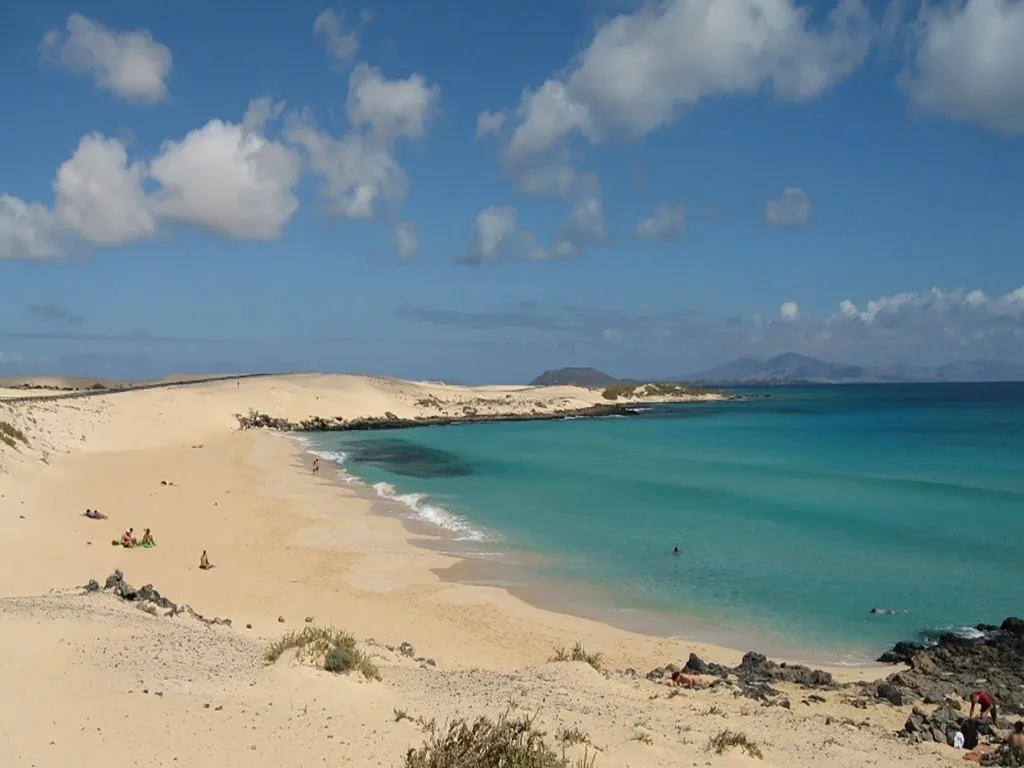
The Corralejo Natural Park is a coastal strip of about 2.5 by 10.5 km in the north-east of the island, which the tourist board calls the largest area of dunes in the Canary Islands. The northern part is white sand running down to turquoise water; the southern part is red and ochre volcanic ground. The FV-1 road from Puerto del Rosario to Corralejo crosses the park, but you explore it on foot.
The long beaches along the park change as you go: quiet coves to the south, family beaches further north – El Burro, for example, has lifeguards – and El Médano, nearest the town, which belongs mainly to kitesurfers and windsurfers. Bring water, sun cream and a hat, as there is no shade in the dunes.
Isla de Lobos: what to know before you go
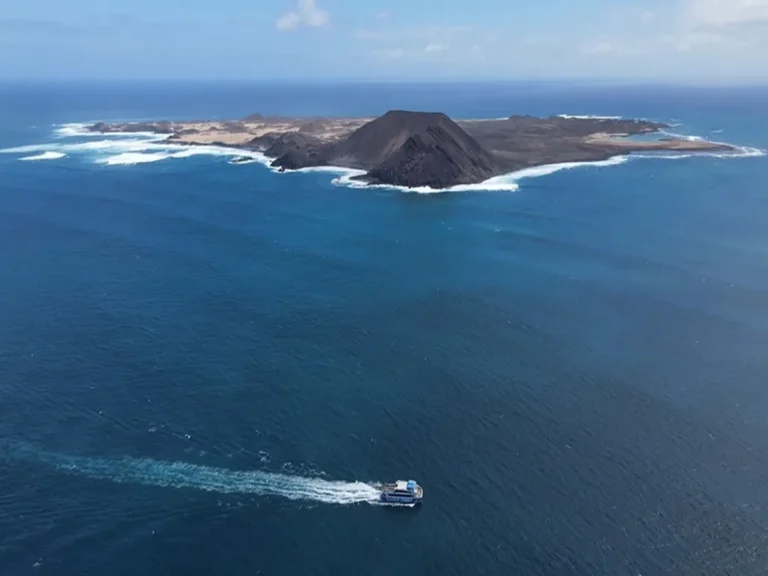
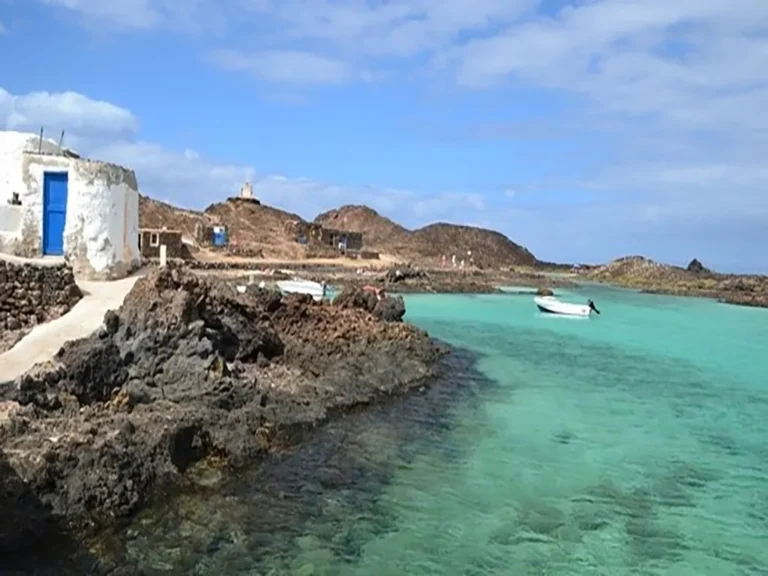
Lobos is a tiny island of 4.5 km², 127 metres at its highest and without a single road, 15 minutes by boat from Corralejo. It is a Natural Park with clear water for snorkelling and paths to the volcanic cone of La Caldera, the quiet beach of La Calera and the Lobos lighthouse. The small village of Puertito de Lobos has a restaurant, but there is hardly any shade on the island, so bring water and sun protection.
Do you need a permit for Lobos?
Yes. Every visitor needs an authorisation from the environment department of the Cabildo de Fuerteventura, requested online through its Lobos Pass web app. The island’s management plan limits visitors to 200 at a time, so permits are issued for a date and a time slot – when the online system started, the Cabildo set a morning slot of 10:00–14:00 and an afternoon slot of 14:00–18:00. Staff check permits on the island, and visitors without one, or who stay beyond their slot, can be fined.
The permit is separate from your boat ticket. Check whether your ferry or tour arranges it, and if not, request it yourself for your date and slot before you travel. Staying on Lanzarote? Isla de Lobos at Your Own Pace includes the ferry from Playa Blanca to Corralejo and the boat on to Lobos, with an optional hotel pickup. The permit is not listed among its inclusions, so request it on Lobos Pass.
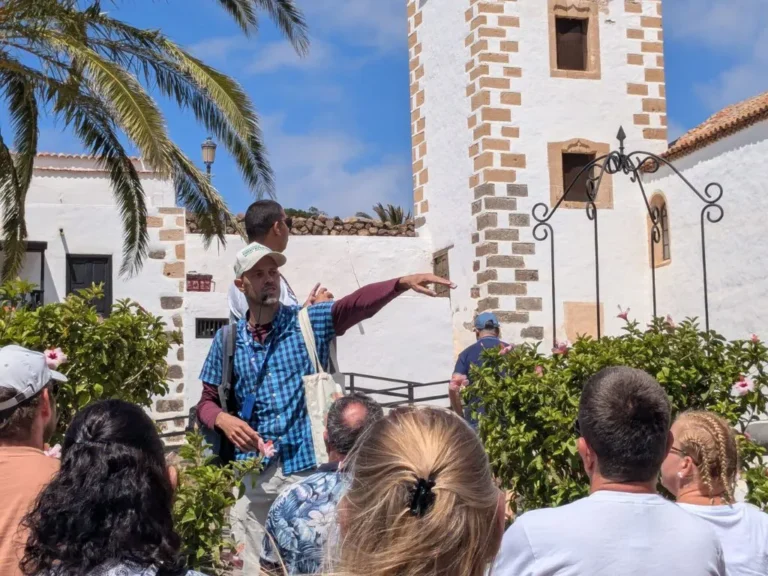
Betancuria, inland and away from the sea, was founded around 1404 by the Norman knight Jean de Béthencourt and was the first capital of the island. About two centuries later it was razed and had to be rebuilt; today its cobbled streets, white houses, churches and small museums are protected as a Historic Site.
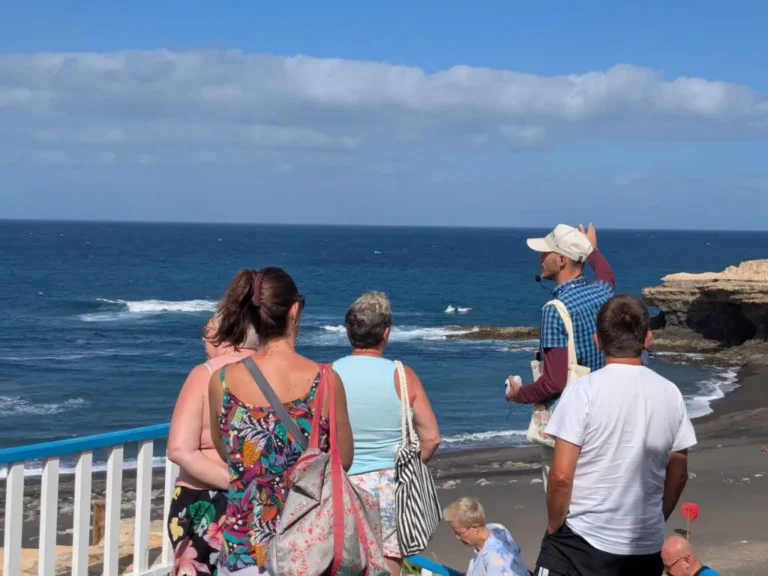
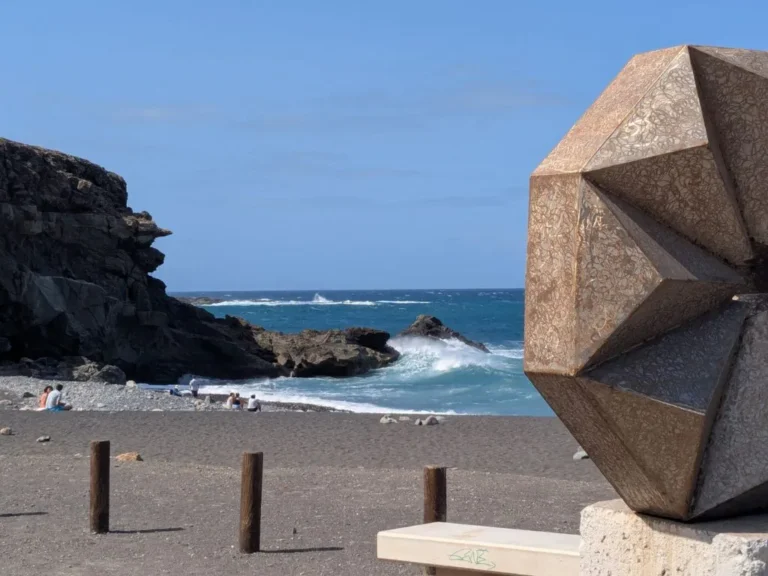
On the west coast, the fishing village of Ajuy has a beach of black volcanic sand and a network of sea caves. The tourist board says the rocks there are the oldest in the Canary Islands: sediments formed on the deep ocean floor between 100 and 150 million years ago. Ajuy beach has no lifeguards and can have strong waves, so swim only when the sea is calm.
Our Discover Fuerteventura tour links these places in one day: the Entallada lighthouse, Ajuy, Betancuria and the Corralejo dunes, with a traditional lunch. It leaves from Corralejo on Fridays and from Caleta de Fuste on Wednesdays. There is no hotel pickup, so you meet the group at the starting point.
The Jandía peninsula in the far south is a Natural Park whose highest point, Pico de la Zarza, reaches 807 metres. On its rugged north-western side lies Cofete, a beach of about 12 km below steep mountains, and the Mirador de los Canarios viewpoint looks down over it.
The road there is a dirt track of about 8.5 km with difficult sections. Cofete has no lifeguards and strong waves, and the tourist board asks visitors to treat the Atlantic there with the utmost respect – see it as a beach for walking and photos, not for swimming. On the sheltered side of the peninsula, Costa Calma has more than 10 km of beaches with gentle wind and calm water, and the beaches of Jandía have hosted the Windsurfing and Kiteboarding World Championship for years.
El Cotillo and Caleta de Fuste
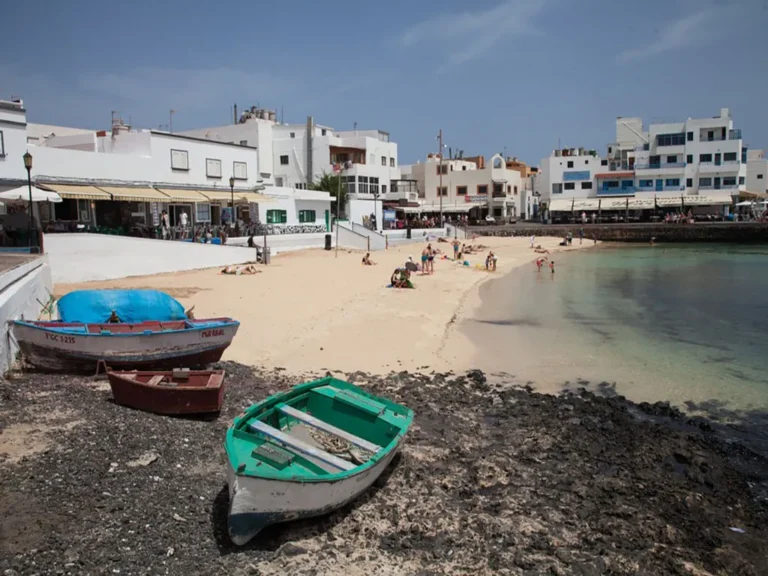
El Cotillo, in the north-west, is a fishing village known for its seafood restaurants. Its La Concha beach is protected from the waves by a natural reef, so children can splash in calm, turquoise water. From Lanzarote, Fuerteventura Highlights visits El Cotillo, Corralejo and the dunes with a guide; if you prefer a free day on the island, choose Fuerteventura at Your Own Pace instead.
Caleta de Fuste, on the east coast, is about 10 minutes from the airport. Its El Castillo beach lies in a protected bay, named after an 18th-century fort nearby, with sunbeds, a promenade and a marina. From the marina, the Obycat catamaran sails to the bay of Pozo Negro every morning and afternoon for snorkelling, a swim and a paella lunch.
Day trips to Lanzarote
Lanzarote lies just across the strait from Corralejo, and the ferry to Playa Blanca takes 30–45 minutes, depending on the boat. Two of our trips include pickup near your hotel:
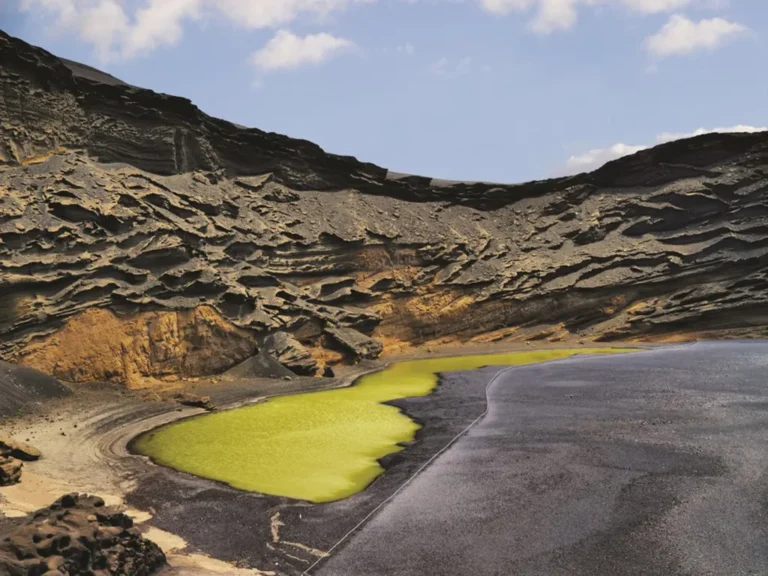
Volcán Express – a guided visit to the Fire Mountains of Timanfaya National Park, a wine tasting in La Geria, the Aloe Vera Museum and the green crater lake of Lago Verde. The guide speaks Spanish.
Lanzarote at Your Own Pace – transfer and ferry only, with free time for the beaches of Playa Blanca or the market at Marina Rubicón. The guide speaks Spanish and English.
Both run on Tuesdays, Thursdays and Saturdays, leaving at 10:30. Take your ID card or passport for the ferry. For more on the volcanoes, read our article on Timanfaya and the volcanoes of Lanzarote.
The trade winds blow mainly from the north, and in spring and summer they create ideal conditions for windsurfing and kitesurfing – less ideal for a picnic on an open beach. Pack a windproof layer, and on windy days choose a sheltered bay such as Caleta de Fuste, La Concha in El Cotillo or Costa Calma.
Distances
Fuerteventura is the second-largest Canary Island and long rather than round, with Corralejo at the northern tip and Jandía in the far south. Plan the north (the dunes, Lobos, El Cotillo) and the south (Jandía, Cofete) as separate days. Seventeen bus routes link the towns, and the airport is 5 km from Puerto del Rosario, the capital.
Safe swimming
Check the flag: red means no swimming, yellow take care, green good conditions. Respect a red flag even if the sea looks calm.
The Canary Islands government notes that northern beaches are generally more dangerous than southern ones, because of wind, waves and currents.
On beaches without lifeguards, such as Cofete and Ajuy, do not swim alone, and stay out of the water when the waves are strong.
Swim parallel to the shore. If a current pulls you out, do not swim against it: let it carry you until it weakens, then swim back.
Watch inflatables and airbeds – a current can carry them off without you noticing.
Yes. Every visitor needs an authorisation from the Cabildo de Fuerteventura, requested online through the Lobos Pass web app for a date and time slot. It is separate from the boat ticket, and staff check it on the island.
Can you swim at Cofete beach?
Cofete has no lifeguards and strong waves, and the tourist board asks visitors to treat the sea there with great respect. It is best enjoyed as a beach for walking and photos.
How long is the ferry from Fuerteventura to Lanzarote?
From Corralejo to Playa Blanca the crossing takes about 30–45 minutes, depending on the boat. Bring your ID card or passport.
Is Fuerteventura windy?
Often, yes. The trade winds blow mainly from the north, especially in spring and summer, which is why the island is popular for windsurfing and kitesurfing. Sheltered bays such as Caleta de Fuste and Costa Calma are calmer.
Can you see Fuerteventura without a car?
Yes. An island tour with lunch leaves from Corralejo and Caleta de Fuste, day trips to Lanzarote include hotel pickup, Lobos is reached by boat from Corralejo, and seventeen bus routes link the towns.
White dunes on the edge of town, the small island of Lobos and Lanzarote across the water: what to do in Corralejo, the Lobos permit and trips without a car.
A sheltered resort on the south-west coast of Gran Canaria: the beaches of Puerto Rico and Amadores, dolphin watching from the harbour and getting around without a car.

 Lanzarote at Your Own Pace: Day Trip from Fuerteventura