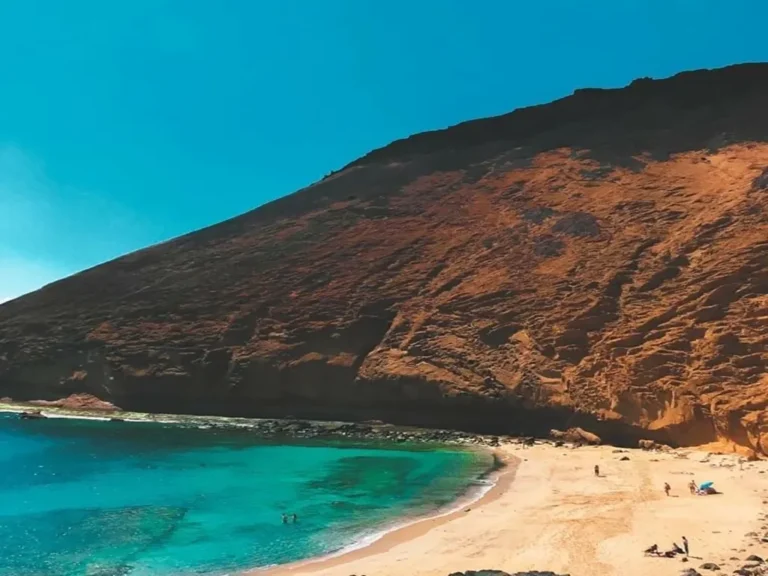
Playa Blanca and the Papagayo beaches: things to do without a car
A resort with calm beaches at the southern tip of Lanzarote: what to do in Playa Blanca, how to reach the Papagayo coves without a car and where its ferries go.
To visit Timanfaya National Park, you go to the Montañas del Fuego visitor area, where a coach takes you along the Ruta de los Volcanes, or you book one of the national park’s free guided walks. You cannot drive or hike freely through the lava fields. In 2026 Montañas del Fuego is open every day from 9:00 to 15:45, and tickets are sold online only, for a set entry time.
This guide explains what the ticket includes, which walks you can book, the sights just outside the park, César Manrique’s places in the north of Lanzarote and how to get there without a hire car.
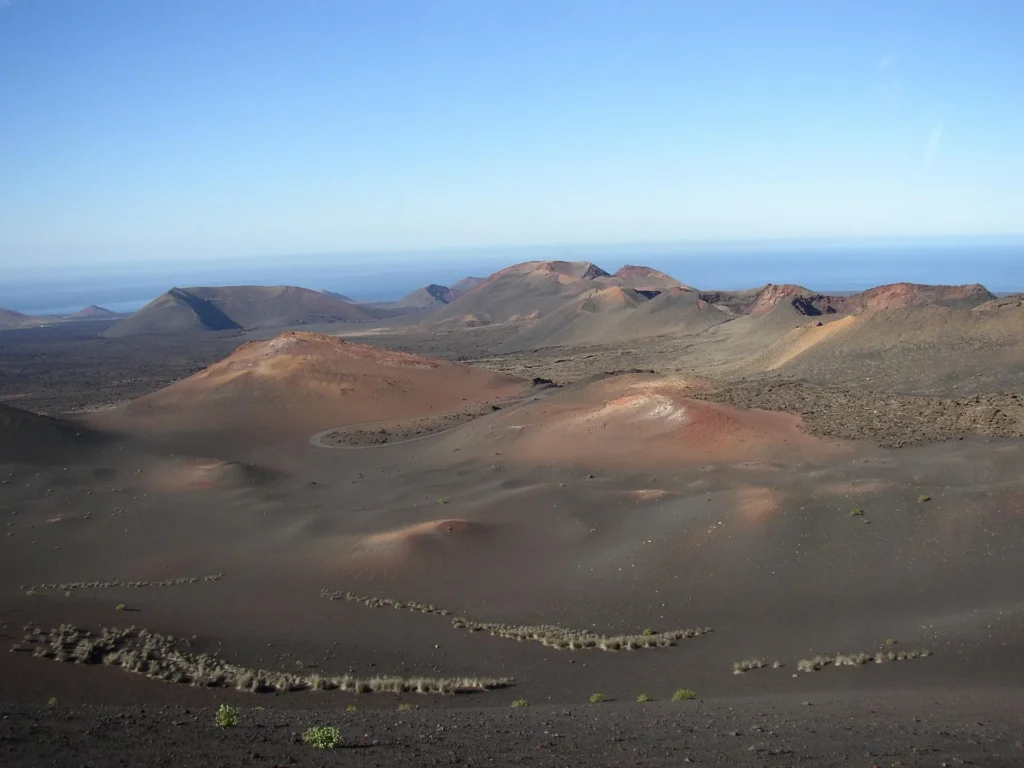
The landscape is young. Between 1730 and 1736 a chain of eruptions covered about a quarter of Lanzarote with lava and ash, burying several villages. A second, shorter eruption followed in 1824, from 31 July to around 25 October, when three new volcanoes opened; one of them, Volcán Nuevo del Fuego, lies inside today’s park.
Timanfaya became a national park in 1974 and covers about 5,100 hectares. It is the only national park in the Canary Islands that reaches the sea, and the whole of Lanzarote has been a UNESCO Biosphere Reserve since 1993. The ground is still hot: the park gives temperatures of up to 610 °C just 13 metres below the surface.
The visitor area of Montañas del Fuego, the Fire Mountains, is run by the island’s tourist centres, the CACT. Everything starts on the Islote de Hilario, a hill in the middle of the lava with the car park, the coach stop, a shop and the El Diablo restaurant. From the entrance barrier at El Taro to the car park you must stay inside your vehicle.
The coach route was conceived by César Manrique and is included in the ticket. It follows a road of about 14 kilometres through the heart of the 1730–1736 eruptions, past craters, lava fields and the ash slopes of the Valle de la Tranquilidad, with a recorded commentary that includes English. Coaches leave about every 20 minutes, and the ride takes 35–40 minutes.
Back on the Islote de Hilario, short demonstrations, including a steam geyser, show how much heat is still stored just below the surface. Next to them, the El Diablo restaurant, also designed by Manrique, grills meat and vegetables over a five-metre well where the natural temperature reaches around 250 °C. It does not take reservations; tables are given out as they become free.
| Montañas del Fuego | At the time of writing |
|---|---|
| Opening hours | 9:00–15:45, every day |
| Tickets | Online only, for a chosen entry time; arrive 15 minutes early |
| Price | €30 per adult, children under 7 free (CACT, November 2026) |
| Visit length | About 1 hour 15 minutes |
| Coach route | About 14 km and 35–40 minutes, included |
Changes and refunds are not possible, and a ticket is no longer valid if you arrive outside your time slot, so leave plenty of time for the journey. Pets are not allowed, except assistance dogs, and the CACT suggests a baby carrier rather than a pushchair. For a closer look, its “Insólita” experience is a two-hour guided visit in a small group that stops at Montaña Rajada and the Tinecheide refuge, on Mondays, Wednesdays and Saturdays.
Not on your own. Because the volcanic ground is fragile, the park’s rules forbid leaving the authorised roads and paths, and taking rocks or plants of any size. The only part you may walk freely is the coast, along a path of about 9 km over rough lava that the park rates as very difficult. Inland, you walk only with a park guide.
Both walks are free and run in groups of up to eight people, in English or in Spanish, for walkers aged 16 and over (16 and 17 with an adult). Book them on the national parks’ online booking centre, reservasparquesnacionales.es, up to one month ahead. Closed sports shoes are compulsory, and you need to show your ID.
The national park’s own visitor centre stands on the road from Tinajo to Yaiza, just outside the park, and at the time of writing opens every day from 9:00 to 16:00. It has an exhibition on volcanoes with panels in English, a room that simulates an eruption and a raised walkway over the lava of 1730–1736 – a good first stop before the Fire Mountains. Near the park road, at the Echadero de los Camellos, the town hall of Yaiza runs short camel rides on the slopes of the volcano.
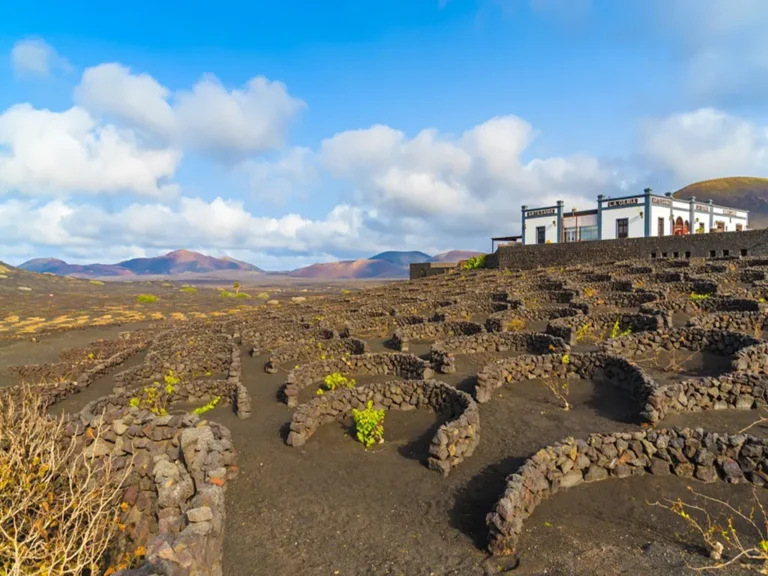
The coast road south of Timanfaya and the wine country to the east are open landscapes with viewpoints and paths, and island tours often combine them with the Fire Mountains.
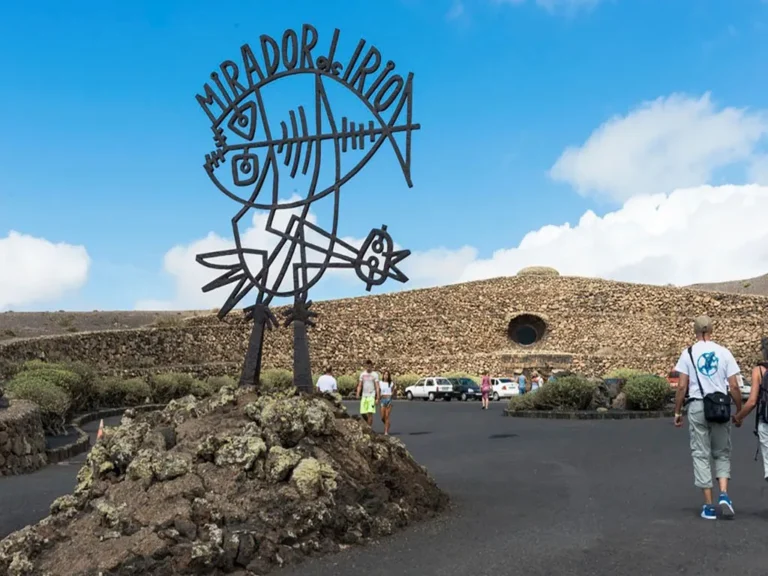
The Lanzarote artist César Manrique shaped several of the island’s best-known sights, which the CACT runs today. Three of them are in the north:
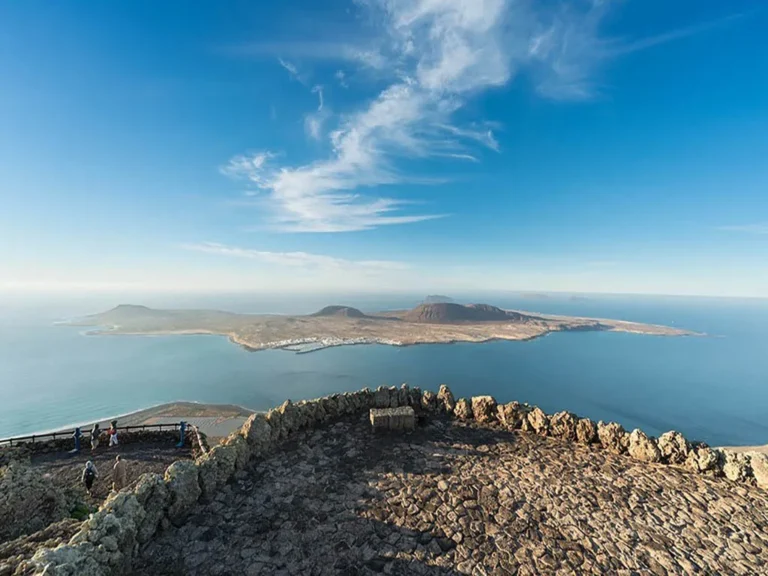
Our LagOmar and La Graciosa day trip ends at Mirador del Río. It runs on Wednesdays, with pickup near your hotel, a boat trip to La Graciosa and lunch on board.
7 hNorth Lanzarote Highlights: LagOmar and La Graciosafrom €79per adultDetailsNo public bus goes into the national park. Buses run to Yaiza and to Tinajo and Mancha Blanca, and the regional government suggests continuing by taxi from there. Most visitors without a car come on an organised island tour.
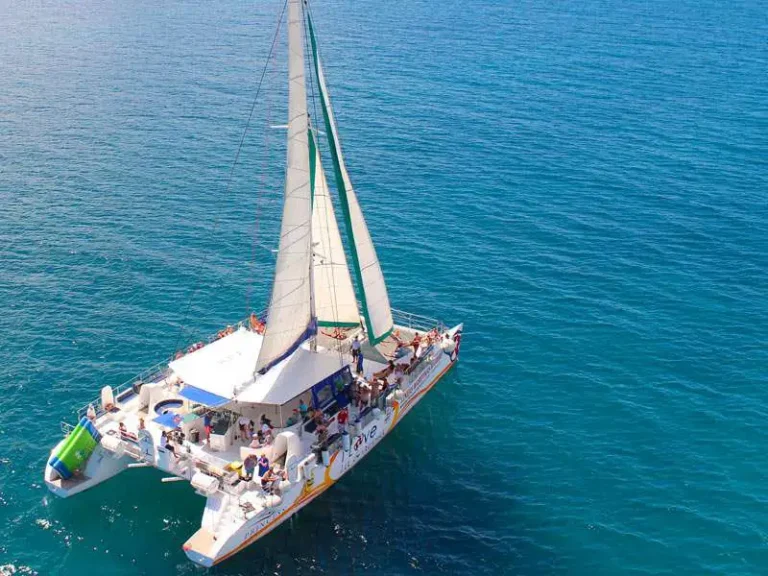
To be clear: at the time of writing our Lanzarote excursions are mostly boat trips and day trips to the neighbouring islands, such as the Papagayo catamaran, and we do not sell a Timanfaya tour with pickup from Lanzarote hotels.
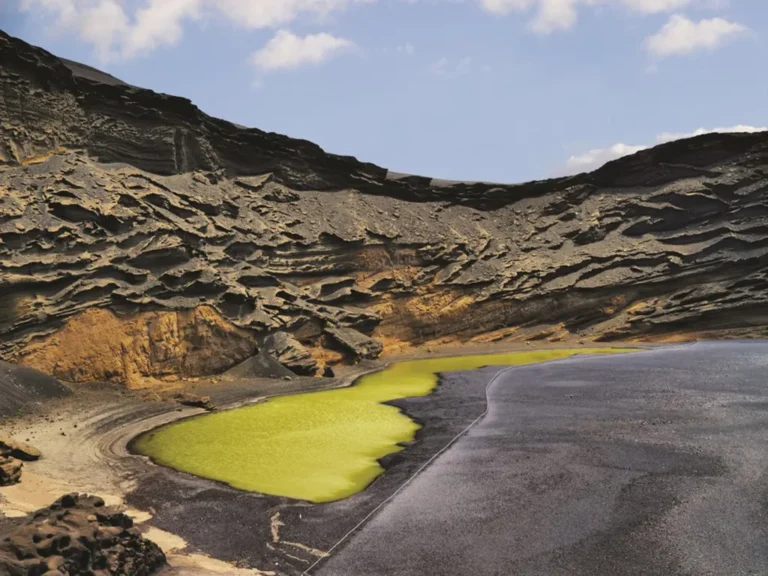
If you are staying on Fuerteventura, though, the Volcán Express brings you across for the day: pickup near your hotel, the ferry from Corralejo to Playa Blanca, a guided visit to the Fire Mountains, a wine tasting in La Geria, the Aloe Vera Museum and the green lagoon at El Golfo. It runs on Tuesdays, Thursdays and Saturdays, and the guide speaks Spanish.
5 hVolcán Express: Lanzarote Volcano Tour from Fuerteventurafrom €69per adultDetails
Prefer to explore on your own? Lanzarote at Your Own Pace covers the transfer and the ferry from Fuerteventura and leaves the day free; with a hire car (not included) you can reach Timanfaya. For more ideas on that island, see our guide to Fuerteventura’s sights and excursions.
Still deciding where to spend your holiday? Our comparison of which Canary Island suits which kind of trip may help.
Not freely. Leaving the authorised roads and paths is forbidden. You can walk the rough coastal path on your own, or join a free guided walk such as the Tremesana route, booked with the national park.
At the time of writing, Montañas del Fuego is open every day from 9:00 to 15:45. The Mancha Blanca Visitor Centre opens every day from 9:00 to 16:00.
Yes. The Montañas del Fuego ticket includes the Ruta de los Volcanes, a coach route of about 14 km with a recorded commentary, and the geothermal demonstrations.
Yes. Tickets are sold online only, for a set entry time, and cannot be changed or refunded. Arrive 15 minutes before your slot.
No public bus enters the park. Buses go to Yaiza and Tinajo, and from there you need a taxi, or you come on an organised tour.
A resort with calm beaches at the southern tip of Lanzarote: what to do in Playa Blanca, how to reach the Papagayo coves without a car and where its ferries go.
Two visits inside the same lava tube and a viewpoint built into a cliff: hours, prices and booking for César Manrique’s centres in the north of Lanzarote.
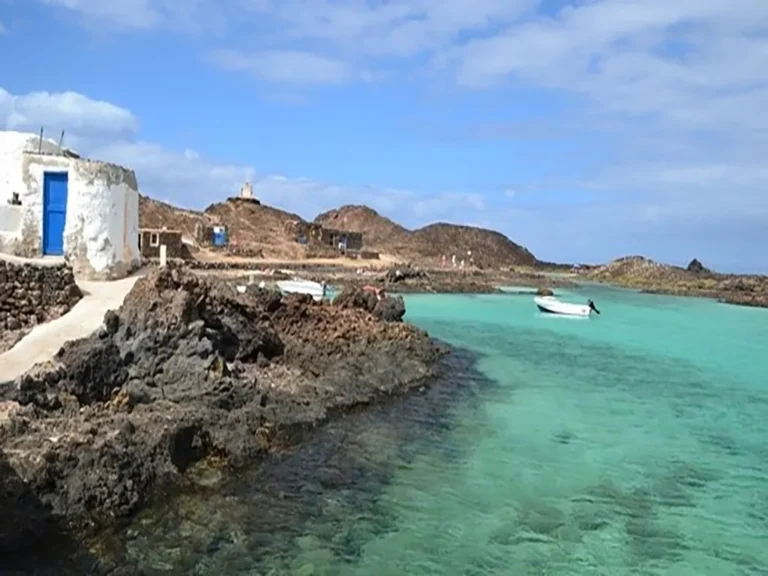
A small island of sandy tracks off the northern tip of Lanzarote: how to get to La Graciosa, which beaches are calm and how to spend a day there without a car.