Whale and dolphin watching in Tenerife: when to go and which trip to choose

  • Tenerife
  • When to go
  • 6 min read

In short

  • Short-finned pilot whales and bottlenose dolphins live off south-west Tenerife all year round.
  • More species turn up in spring and summer, including the migratory Bryde’s whale.
  • Most trips leave from Puerto Colón, Los Cristianos and Los Gigantes and last 2–5 hours.
  • Boats must keep at least 60 metres away and may stay near the animals for 30 minutes at most.
  • Two-hour family trips start from €27; many trips include hotel pickup.

Yes, you can see whales and dolphins in Tenerife in any month. Short-finned pilot whales and bottlenose dolphins live off the south-west coast all year round, so a two- or three-hour boat trip from the south-west coast has a good chance of meeting them. They are wild animals, though, and no boat can promise a sighting.

Below you will find which species live here, when to go, where the boats leave from, the rules every boat has to follow and how to choose between a short family trip, a catamaran with a swim stop and a longer day out to the cliffs of Los Gigantes.

Which whales and dolphins live off Tenerife

Scientists count about 30 species of whales and dolphins in Canary waters. Around Tenerife, a long-term study from 1997 to 2006 recorded 16 species, but two of them made up more than four out of five sightings: the short-finned pilot whale and the bottlenose dolphin. Both are resident, which means they stay here instead of migrating. Atlantic spotted dolphins are also seen through the year.

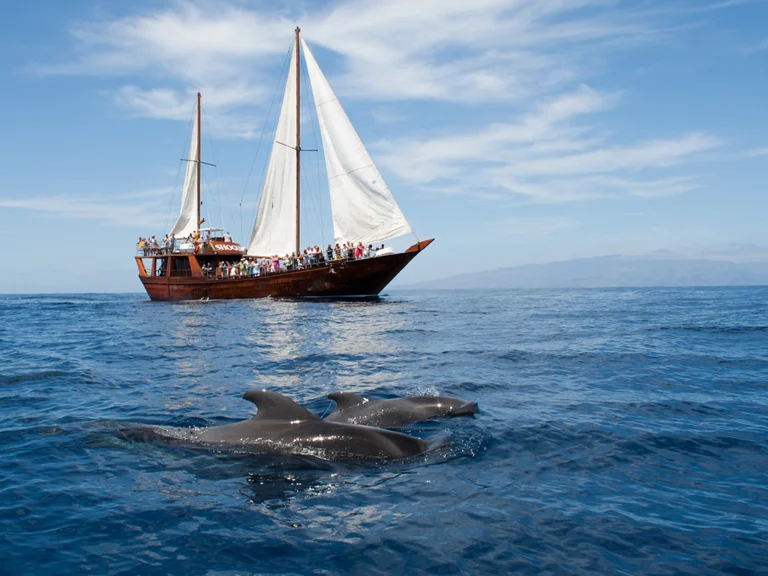
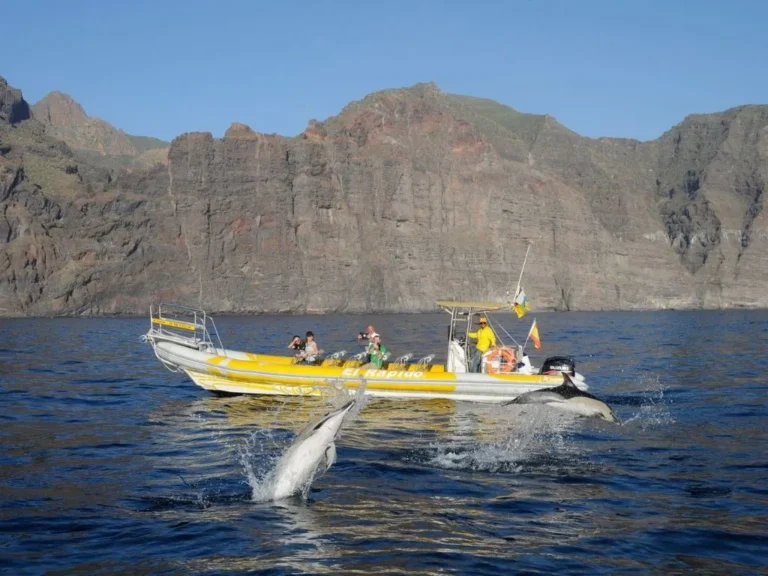
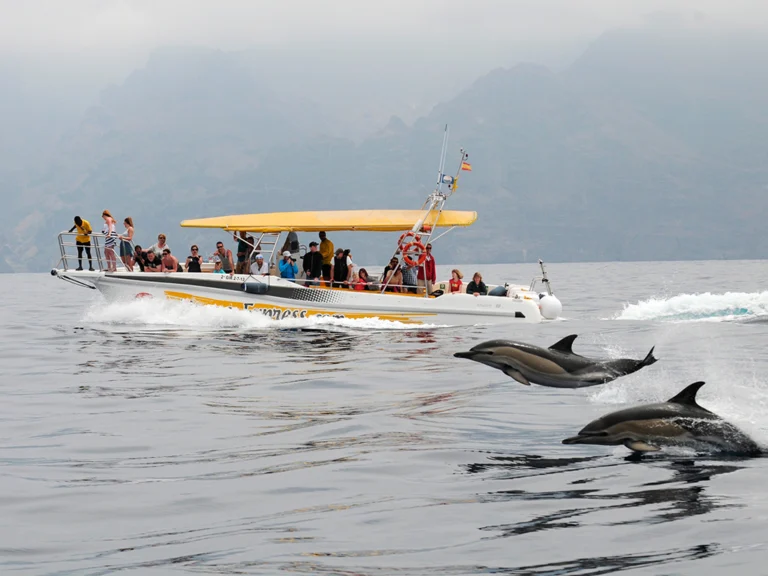
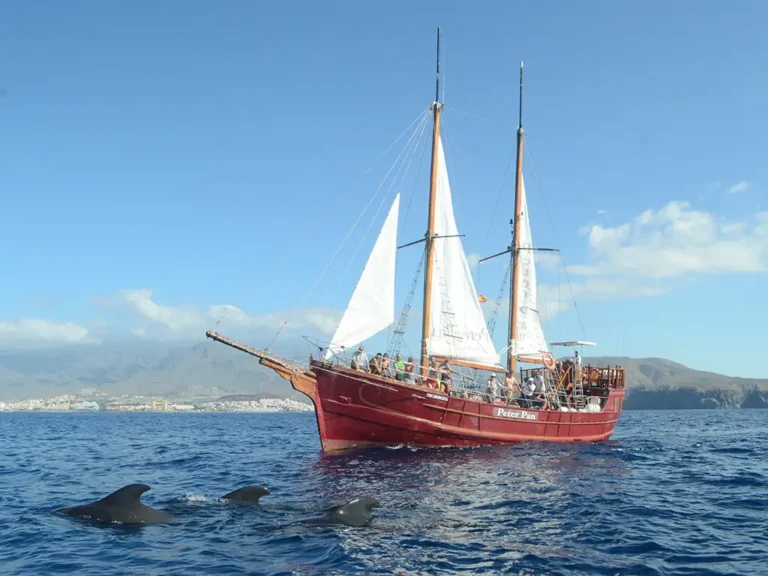
Pilot whales are the animals most people come for. They can grow to about six metres, travel in family groups and often rest at the surface, which makes them easy to watch from a boat. Bottlenose dolphins are smaller and faster, and sometimes ride the bow wave.

The sea between Teno and Punta de Rasca is protected as a Special Area of Conservation, the Franja Marina Teno-Rasca. It covers the coast from the Teno peninsula past Los Gigantes and Costa Adeje to the south of the island, which is exactly where the whale-watching boats sail.

When is the best time to see whales in Tenerife?

There is no bad season. Because pilot whales and bottlenose dolphins live here, trips run every day of the year and sightings happen in winter as well as in summer.

If you would like the chance of something more unusual, go in spring or summer. The Tenerife study found the most species between May and August, and the Bryde’s whale, a large baleen whale that migrates through the Canaries, is seen most often in summer.

Time of day matters less than the length of the trip. A three-hour trip gives the crew more time to find the animals and to wait quietly while they surface, and it usually leaves room for a swim on the way back. If you get seasick easily, choose a larger catamaran: it rolls much less than a small fast boat.

Book for the first days of your holiday. If the sea is too rough and the trip is cancelled, you still have time for another date.

Where the boats leave from

Almost all whale-watching trips start on the south-west coast, close to the animals:

Many trips from Puerto Colón and Los Cristianos include free pickup from hotels in the south. Trips from Los Gigantes usually do not, so check the pickup line on each tour before you book.

Which whale-watching trip to choose

The animals are the same on every boat; what changes is the length of the trip, the size of the boat and what else is included.

Type of tripTimeGood for
Short trip2 hoursFamilies with young children, a first try, a tight schedule
Catamaran with a swim stop3 hoursMost visitors: whales, a swim and drinks or a snack on board
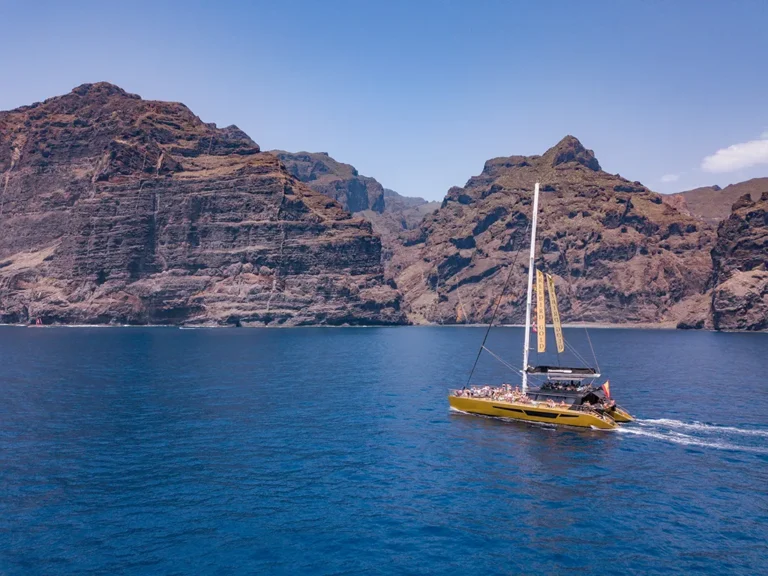
Day out to Los Gigantes and Masca Bay4.5–5 hoursSeeing the 600-metre cliffs as well, with lunch
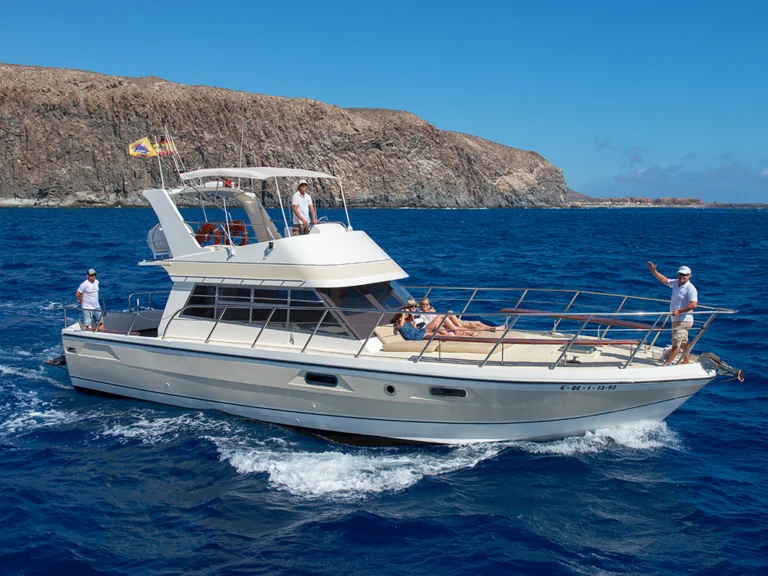
Small boat from Los Gigantes1.5–2 hoursSmall groups, close-up views of the cliffs
Private charter2–8 hoursGroups, celebrations, your own route

Short trips for families

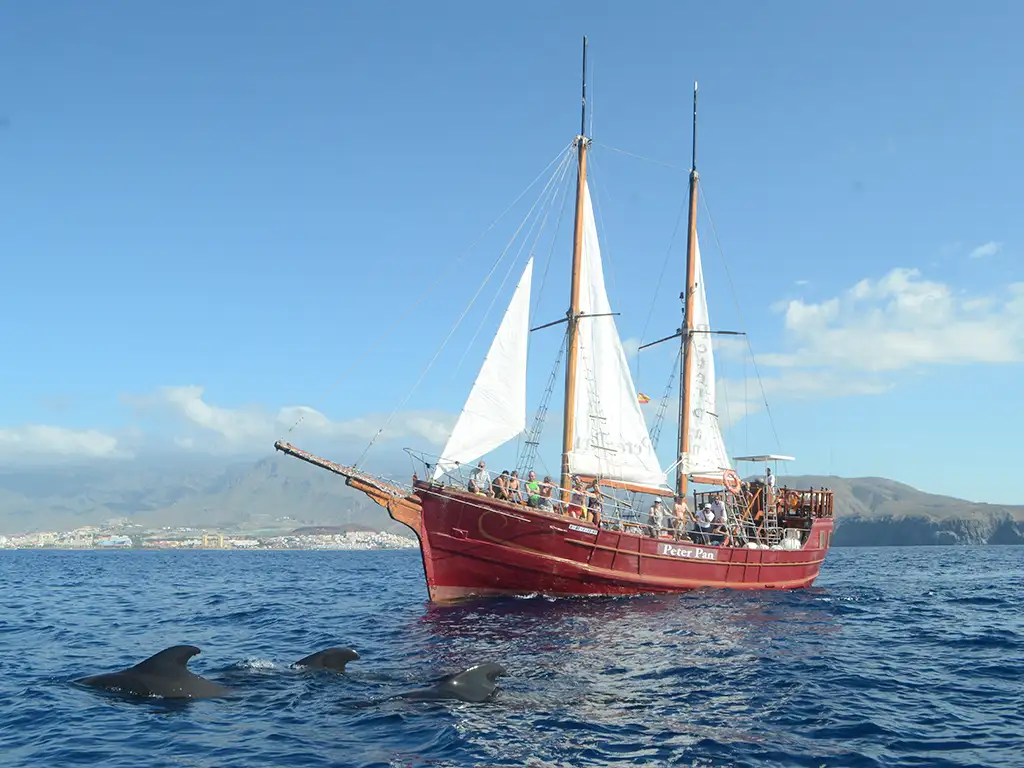
Two hours is enough to find the animals without tiring small children. The Peter Pan, a schooner built in 1962 and dressed as a pirate ship, leaves Los Cristianos three times a day.

2 h3 optionsPeter Pan Pirate Ship: Family Whale Watching TripHotel pickup · Free cancellation up to 24 h beforefrom €27per adultDetails

Catamarans with a swim stop

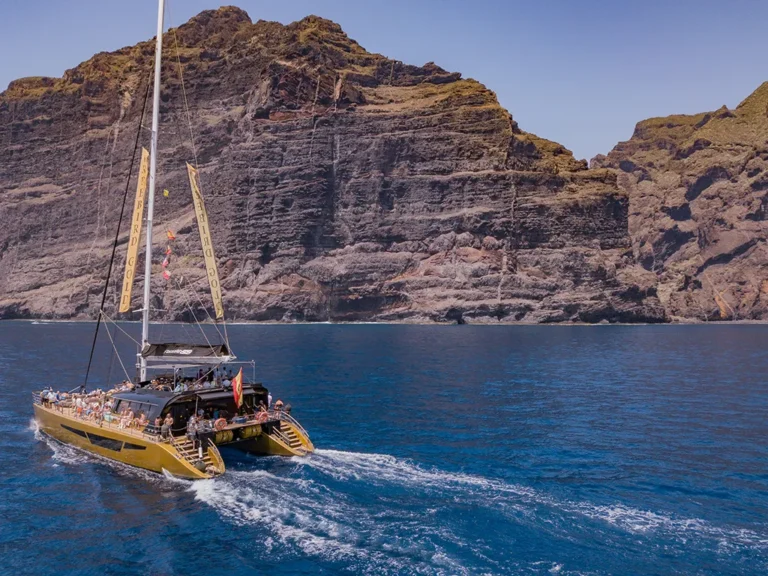
The classic three-hour trip sails along Costa Adeje, looks for whales and dolphins and then stops in a calm bay for a swim. On the Freebird you can also choose a 4.5-hour trip to the cliffs of Los Gigantes with lunch on board. Couples who prefer a quiet boat can look at the Abrazo catamaran, which takes adults only and no more than nine guests.

2–4 h4 optionsFreebird Catamaran: Whale and Dolphin WatchingFree cancellation up to 24 h beforefrom €30per adultDetails

Listening to whales

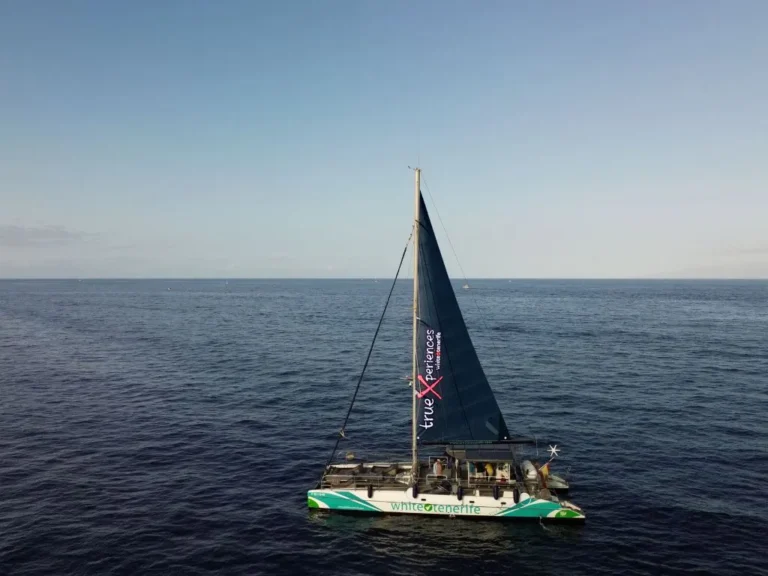
Some boats carry underwater microphones, so you can hear the clicks and whistles of the animals through speakers on deck. The White Tenerife catamaran does this on all its shared trips, which include a swim and snorkel stop.

3 h7 optionsWhite Tenerife Eco Catamaran: Watch and Listen to WhalesFree cancellation up to 24 h beforefrom €47per adultDetails

Wheelchair users can book Bat4All, a boat from Los Cristianos with a hydraulic platform into the sea.

The rules every whale-watching boat follows

Whale watching in the Canary Islands is regulated by a decree of the regional government (Decree 178/2000). Among other things, boats may not:

  • approach the animals closer than 60 metres;
  • stay within 100 metres of them for more than 30 minutes;
  • join when two other boats are already within 100 metres;
  • go faster than 4 knots within 500 metres of the animals;
  • let anyone swim or dive near them, or throw food into the water.

Licensed boats carry the government’s Barco Azul (“Blue Boat”) flag, which shows that the company is authorised for whale watching, and a certified cetacean guide must be on board. When you see a boat keeping its distance and switching to a slow drift, that is the rule at work – and it is also how you get the calmest, longest views.

Tips for the day

  • Sun and wind: bring sun cream, a hat and a light jacket – it is often breezy at sea even on a hot day.
  • Swimming: if your trip has a swim stop, wear your swimwear under your clothes and bring a towel.
  • Seasickness: eat something light before you go, sit in the middle of the boat and look at the horizon. If you use tablets, take them before you board.
  • Photos: a phone is enough; the animals are usually close to the surface. Keep it on a strap.
  • Cancellation: most boat trips in our catalogue can be cancelled free of charge up to 24 hours before.

Boat Trips in Tenerife

36 tours →

Frequently asked questions

Can you see whales in Tenerife all year?

Yes. Short-finned pilot whales and bottlenose dolphins live off the south-west coast all year round, so trips run in every month. More species, such as the Bryde’s whale, are seen in spring and summer.

Are whale sightings guaranteed?

No. They are wild animals and no operator can guarantee them, although the resident pilot whales and dolphins are seen on most trips.

How long does a whale-watching trip last?

Most trips last 2–5 hours. Two-hour trips are mainly for watching, though some stop for a quick swim; three-hour trips usually add a swim stop and drinks; trips of 4.5–5 hours also go to the cliffs of Los Gigantes and Masca Bay, with lunch.

Can I swim with the dolphins?

No. Swimming or diving near whales and dolphins is not allowed in the Canary Islands. Boats with a swim stop anchor in a bay away from the animals.

Is whale watching suitable for children?

Yes. Two-hour trips such as the Peter Pan pirate ship are popular with families, and children usually pay a reduced price.

Boat Trips36 tours · from €27
View

Menu

Islands