Night tours watch the stars at 2,000–2,400 m, high above the resorts and their lights.
Spain’s Sky Law of 1988 limits lighting, radio and flights to protect the Canary observatories.
Teide National Park has been a Starlight Tourist Destination since 2013.
At Izaña (2,369 m) nights average 1 °C in January and 14 °C in July.
Go in the week around the new moon; several tours accept children only from age 8.
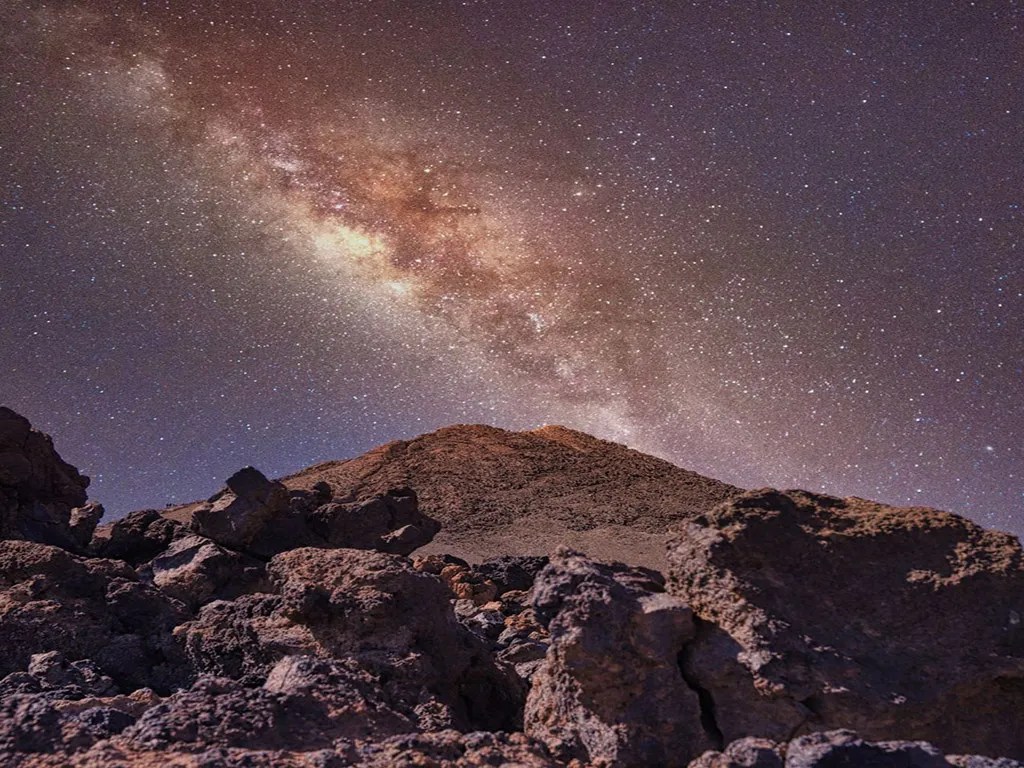
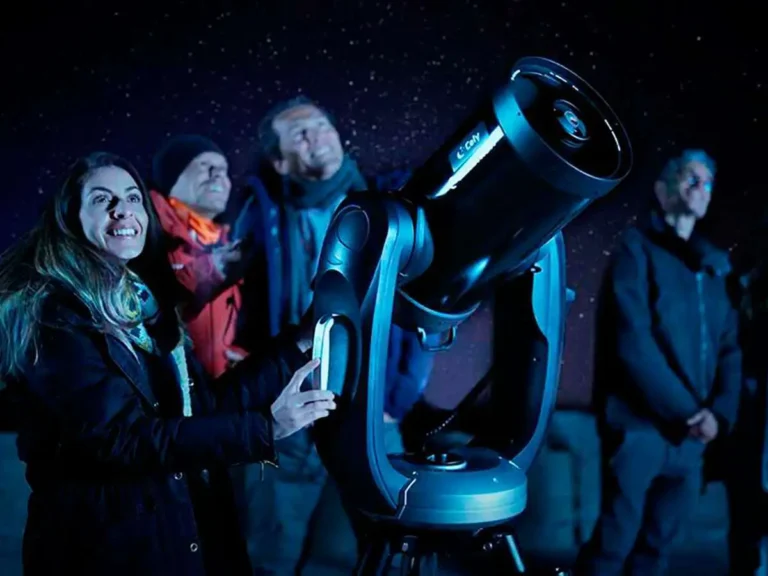
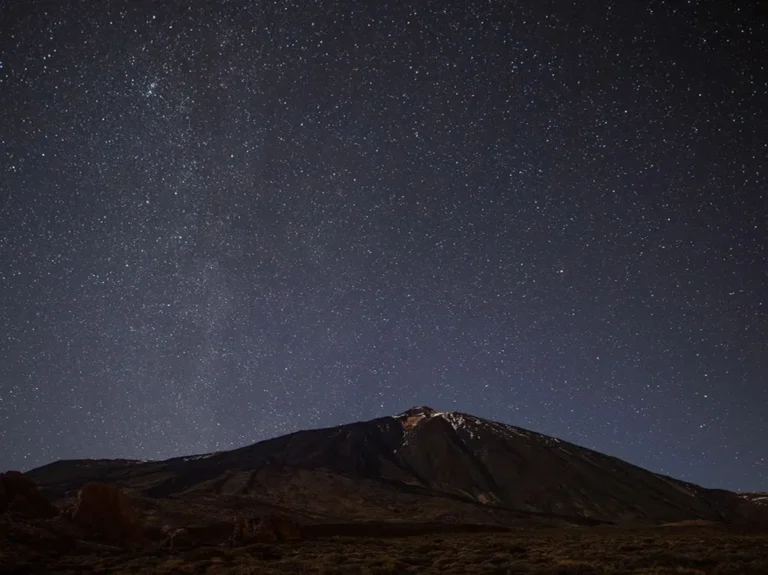
Stargazing on Mount Teide works so well because the viewing spots in Teide National Park lie at 2,000–2,400 metres, often above the clouds and far from the lights of the resorts, and because Spanish law protects the Canary sky for its observatories. For the darkest sky, go on a clear night in the week around the new moon and dress for temperatures close to freezing. Most visitors join a tour with a sunset stop, telescopes and an astronomy guide.
Below you will find why the sky is so dark, when to go, how cold it gets, what to bring, tips for children and how the Teide sunset and night tours differ.
Why the sky over Teide is so dark
Height. Most night tours set up their telescopes at the cable car base station, 2,356 metres up, and the Teide Observatory at Izaña stands at 2,390 metres. The trade winds often pile a “sea of clouds” against the north of the island below these heights, while the national park itself has a dry climate with low humidity.
The law. Spain’s “Sky Law” (Law 31/1988) protects the observatories of the Instituto de Astrofísica de Canarias (IAC). Outdoor lights in the protected area – all of La Palma and the part of Tenerife visible from it – must not shine above the horizon, polluting activities above 1,500 metres are restricted, radio emissions are limited and flight routes over the observatories are regulated. Since 1992 an IAC office has checked lighting projects under the law.
Recognition. In 2013 the Starlight Foundation certified Teide National Park as a Starlight Tourist Destination and the summits of Tenerife as a Starlight Reserve. Many night tours work with guides accredited by the foundation, and the cable car company says 83 of the 88 known constellations can be seen from Teide.
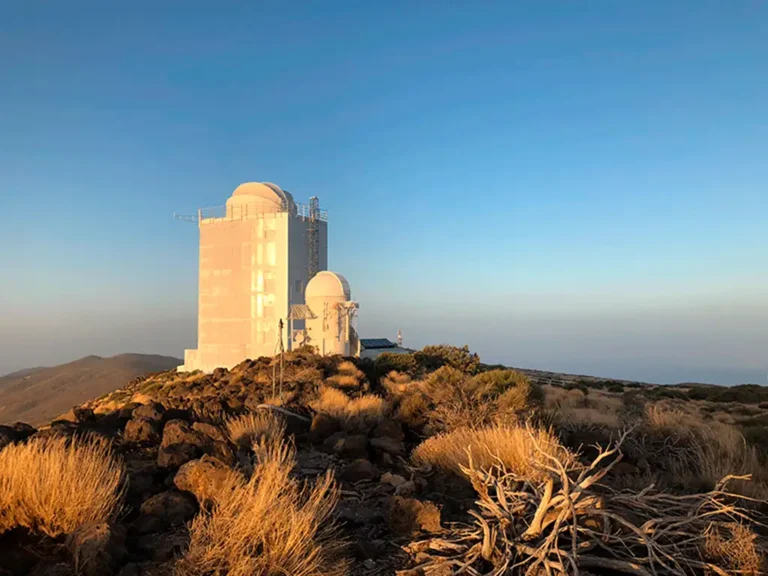
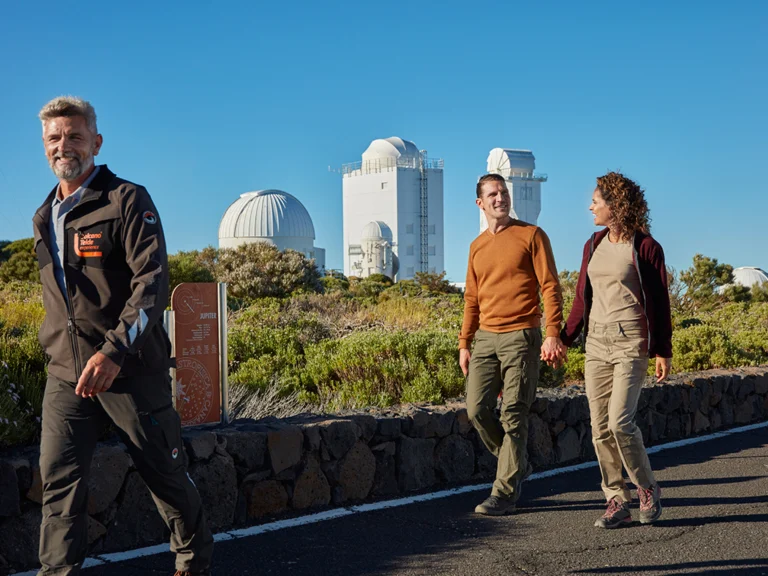
The Teide Observatory is mainly a solar observatory. The IAC says its first telescope arrived in 1964, and today the site hosts European solar telescopes such as the 1.5-metre GREGOR. Tours visit it in daylight; the stargazing itself happens outdoors, with the guides’ own telescopes.
When to go: moon, season and weather
Moon: the darkest nights fall in the week around the new moon, when the Milky Way is easiest to see. Around the full moon fainter stars fade, but the Moon itself is a fine sight through a telescope.
Season: clear nights are possible all year, but summer is the clearest time. At Izaña, AEMET records on average 24–27 clear days a month from June to August and about 9–12 from October to December (1981–2010).
Sunset: in Tenerife the sun sets at about 18:10 in early winter and about 21:05 in midsummer, so evening tours leave earlier in winter and come back later in summer.
Weather: cloud or strong wind can spoil a night, and nobody can promise a clear sky. Some tours refund the activity if the observation is impossible, so read each tour’s weather terms and book early in your holiday to keep a spare evening.
How cold it gets at night on Teide
Much colder than on the coast. These are AEMET’s long-term averages (1981–2010) for its weather station at Izaña, at 2,369 metres – about the height where most stargazing takes place:
Month
Average night low
Average day high
January
1.1 °C
7.5 °C
April
3.5 °C
11.8 °C
July
14.0 °C
23.0 °C
October
6.9 °C
14.3 °C
December
2.4 °C
8.8 °C
January has about 12 frosty days on average, and from December to March there are one to three days of snow a month. Wind makes it feel colder still. At the upper cable car station, 1,200 metres higher, the cable car company warns of very low temperatures at sunset even in summer.
What to bring
Warm layers: a proper jacket, plus a hat and gloves from autumn to spring.
Long trousers, long sleeves and closed shoes: the sunset cable car trip and the observatory tour turn away anyone in sandals, shorts or short sleeves.
Water and a snack if dinner or a picnic is not included.
A charged phone: the Night Skies tours also take photos of you at sunset and under the stars.
Pack as you would for a cold evening at home – even in August.
Stargazing with children
Children usually love the telescopes, but check the minimum age and the length of the evening: most Teide night tours last five to eight hours and get back late. The sunset trip with the cable car, the observatory tour and the night tour at the cable car station take children from 8. Night Skies Tenerife is made for all ages, and children under 4 go free; Teide by Night has a children’s price up to age 11. For daytime ideas, see our guide to Tenerife with kids.
Which Teide sunset and stargazing tour to choose
All of these run from late afternoon into the night as coach tours with pickup from the resorts of Tenerife. They differ in where you watch the sunset, whether a meal is included and what you look at.
Tour
Sunset from
Also included
Sunset and Stars on Teide
Cable car upper station, 3,555 m
Picnic dinner, telescopes; from age 8
Teide by Night
About 2,000 m, often above the clouds
Dinner with wine, telescopes
Mount Teide Night Tour
A viewpoint in the park
Telescopes at 2,356 m; picnic optional
Astronomic Tour
Teide Observatory
Observatory visit, the sun through a telescope
Night Skies Tenerife
On the way up (with cava on some options)
Telescopes and photos; all ages
Sunset from the cable car
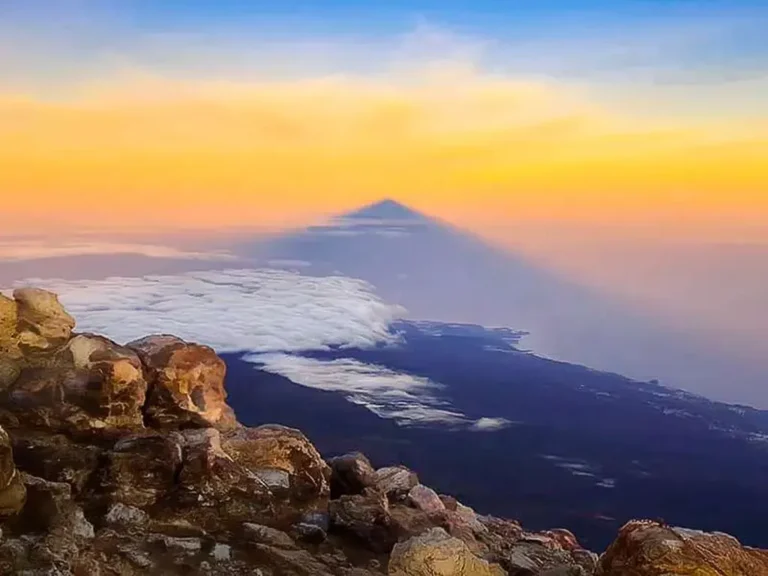
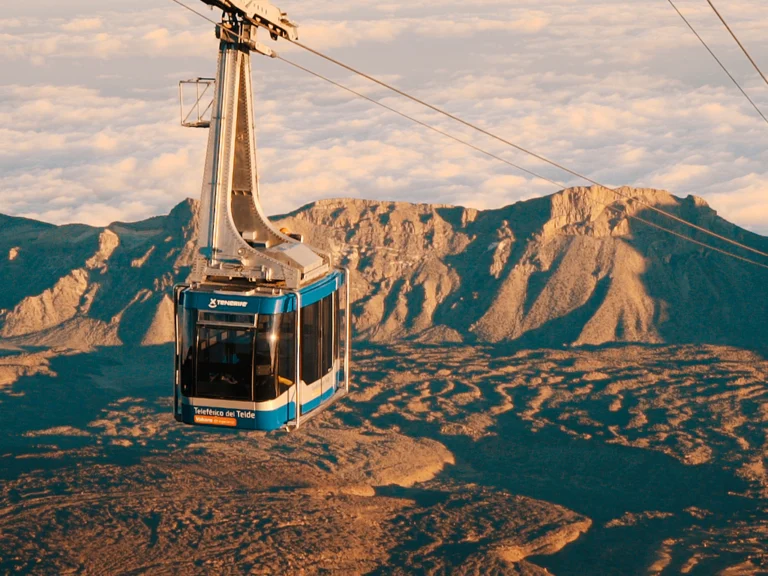
The cable car makes special sunset trips for at most 90 people. On Sunset and Stars on Teide you ride up to 3,555 metres, walk towards the Pico Viejo viewpoint as the volcano casts its shadow over the sea, then have a picnic dinner at the base station before Starlight guides set up long-range telescopes. Pregnant women and people with heart or circulation problems cannot take part.
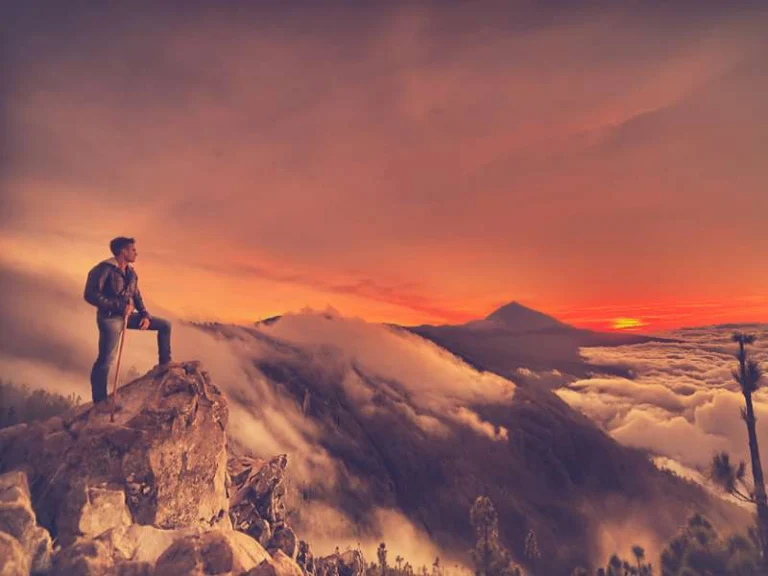
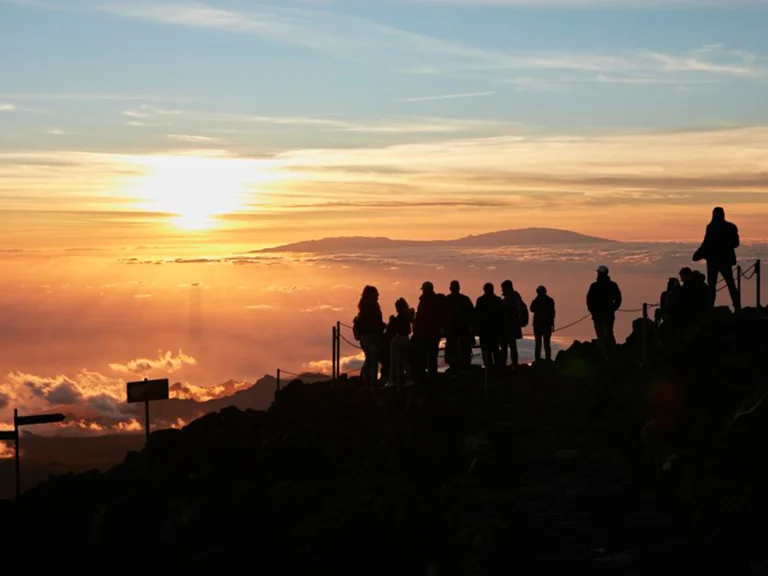
Teide by Night watches the sun go down from around 2,000 metres, often above a sea of clouds with La Gomera on the horizon. A set dinner with wine follows at a restaurant in Las Cañadas, then certified guides use laser pointers and telescopes. Tours in English run on Tuesdays, Thursdays, Fridays and Sundays from the south, and on Wednesdays and Fridays from Puerto de la Cruz.
The Mount Teide Night Tour stops at a viewpoint for the sunset, then sets up professional telescopes at the cable car base station with guides accredited by the Starlight Foundation. If the weather makes the observation impossible, the activity is refunded.
Observatory and stars
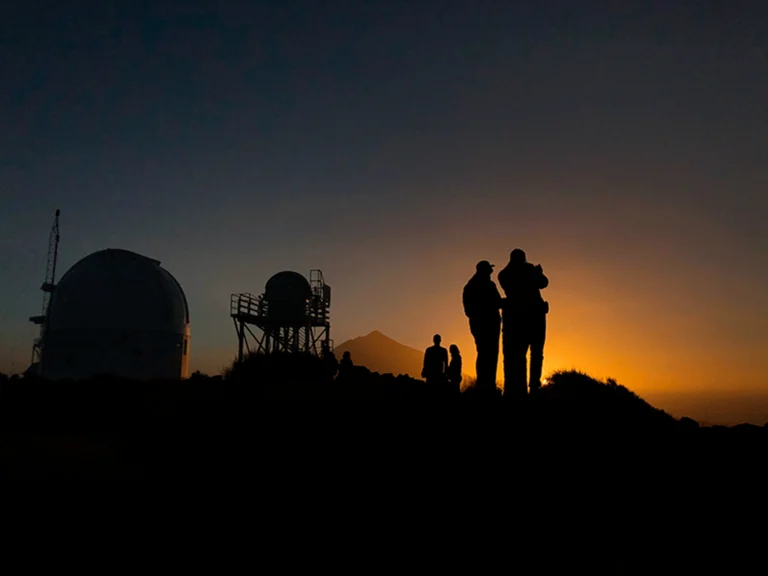
The Astronomic Tour starts in the afternoon with a guided visit to the Teide Observatory, where you look at the sun through a telescope. You watch the sunset from the observatory and finish with the stars at the cable car base. It runs on Tuesdays, Wednesdays and Saturdays.
For your group alone, book the private stargazing tour or the private observatory tour, both bookable every day. With a hire car, the 75-minute astronomical observation meets you at the cable car base station from Monday to Thursday. On a smaller budget or with young children, Night Skies Tenerife leaves the south two hours before sunset and lasts about five hours.
The viewing spots lie at 2,000–2,400 metres, often above the clouds and far from town lights, the air is dry, and Spain’s Sky Law limits light pollution to protect the Canary observatories. The national park is also a certified Starlight Tourist Destination.
When is the best time for stargazing on Teide?
On a clear night in the week around the new moon. Summer has the most clear days, but you can see the stars in every season; winter nights are colder and longer.
How cold is it on Teide at night?
At about 2,400 metres, average night lows are around 1 °C in January and 14 °C in July, and wind makes it feel colder. Bring a warm jacket all year, and a hat and gloves in winter.
Can children go stargazing on Mount Teide?
Yes, but several tours accept children only from 8, including those with the cable car or the observatory. Some tours, such as Night Skies Tenerife, are open to all ages.
Can you watch the sunset from the Teide cable car?
Yes. The cable car runs special sunset trips to the upper station at 3,555 metres for a limited number of people, from age 8 and with warm clothes and closed shoes.
Less than an hour by ferry from Tenerife: the laurel forest of Garajonay, Columbus’s San Sebastián, green valleys and a whistled language – and how to see it in a day.
Mild days on the south coast, cold nights on Teide, the Three Kings in January and the carnival in February: what Tenerife is like in winter and what to book.
Mild days, Christmas lights and four public holidays: what December in Tenerife is like, what is open on Christmas Day and New Year’s Day, and which trips to book.

 Teide Observatory: Guided Visit at Izaña
 Teide Cable Car: Ride to 3,555 m with Summit Ascent